Tag Archives: Pembrokeshire Coast National Park

Guess What I Found…..

Photo: Mike Howe
Photo: Mike Howe

It’s a skylark nest, with four beautiful, tiny eggs in it.  Skylarks are birds of open grasslands and they build their nests on the ground, often producing 2 or 3 broods per year.  The nests are incredibly hard to find because they are so well concealed from predators.

Photo: Mike Howe
Photo: Mike Howe

Skylark numbers have plummeted in the UK by over 90% in the past 50 years as our traditional hay meadows have been replaced by much more intensively managed grasslands that are mown for silage 2 or 3 times a year – the mowing destroys the nests, and so the populations of skylarks and other grassland species have declined rapidly.

This place is different though.  This nest is one of around 60 that can be found on a dis-used World War II airfield near St Davids in West Wales.  The grassland is managed just like an old fashioned hay meadow, with grazing by cattle in the winter, and hay making in late summer, and with no inputs of chemical fertilisers.

The airfield was once a place where the great Halifax bombers flew to patrol along the Atlantic coast and where thousands of service men and women were housed.

St Davids Airfield aerial

These days the airfield is a place of tranquility and calm and home to wild flowers, butterflies and skylarks.

Photo: Mike Howe
Photo: Mike Howe

I have met and talked with some of the men who flew from here at the height of the war, and they couldn’t be happier that this is now a place of peace and where wildlife can thrive.  It seems like a wonderful way to honour and remember those that died on both sides, a place of vibrant and colourful life and peaceful quiet.

Time For a Paddle

Photo: Mike Howe
Photo: Mike Howe

The weather on the Pembrokeshire coast has suddenly turned beautifully sunny and warm.  The sea is sparkling and flat as a pancake, so for the first time since last September we got the kayaks out and went for a little paddle.

Photo: Mike Howe
Photo: Mike Howe

Kayaking gives you such a different perspective on the landscape and seascape around you.  This sea cave cannot be seen from the surrounding cliffs, and as well as being very beautiful, it is also a special place for another reason which I will elaborate on later.

Newgale
Photo: Mike Howe

And with 186 miles of coastline to choose from, all we need is a half decent summer for the first time in years and we’ll be out there exploring once again, I’ll even get the fishing lines out.

Photo: Mike Howe
Photo: Mike Howe


The Coastal Flowers Are Out…..

The Coastal Flowers Are Out and More On the Way.....

The coastal flowers are out, we got sea campion, we got oxeye daisy, we got thrift (or more poetically, sea pinks), it’s all go….

Photo: Mike Alexander

The Music of a Landscape – Part II

This song is dedicated to the Earth, the “Pale Blue Dot”…

Spring on the Pembrokeshire Coast

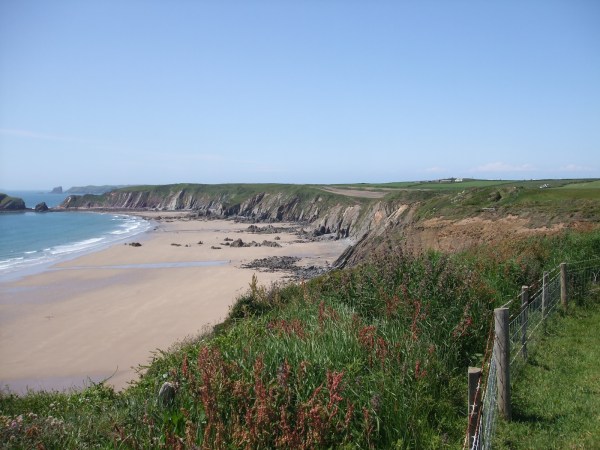
Marloes Sands smaller

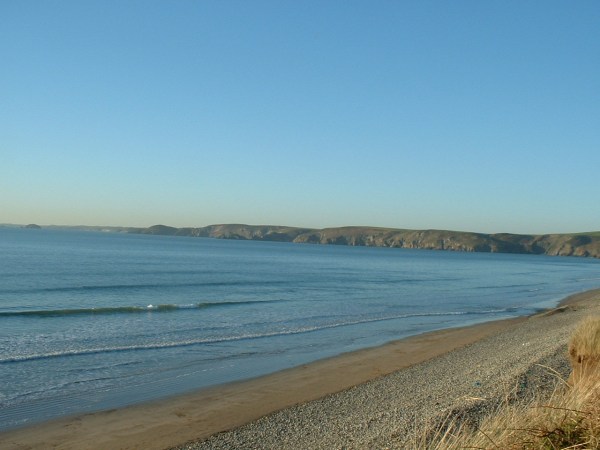
After 6 months of perpetual grey skies and torrential rain, spring has finally arrived on the Pembrokeshire Coast, and today our local beach looks like this.  It’s so nice to finally feel some warm sunshine, although admittedly there is still a chilly north-easterly wind coming down from the arctic.

Puffins on Skomer Island, Pembrokeshire       Photo: Mike Alexander
Puffins on Skomer Island, Pembrokeshire Photo: Mike Alexander

The sea birds have arrived back from the South Atlantic to breed on the offshore islands of Skomer, Skokholm, Grassholm and Ramsey.  These puffins nest in dis-used rabbit burrows on the islands, which are free of predators like rats and foxes, although the threat from the Great Black-backed Gull is still very real for the offspring of these little fellas.

Photo: Mike Alexander

The gannets have returned from their winter feeding grounds in the south to breed in huge numbers (32,000 nesting pairs) on Grassholm Island, and can be seen diving into the sea wherever they spot shoals of fish on which to feed.

Photo: Mike Alexander

In the next few weeks all of the spring flowers will emerge as the land awakens from its winter slumber.  The most familiar birds to be seen from the cliff tops are razorbills, guillemots, kittiwakes, fulmars and various species of gull, as well as shags, cormorants and the rarer choughs and peregrine falcons.

The music of a landscape – Part I

My music is often derived from and about some of the lovely places and wildlife of the Pembrokeshire Coast National Park in West Wales, where I have worked as an ecologist for 20 years.  I hope it is possible to hear the influence of this landscape in my song, which was deliberately written in a style evoking a kind of “national anthem for nature”, if that makes any sense?  Anyway I hope you like it 🙂  The song is from my album “Round River”.