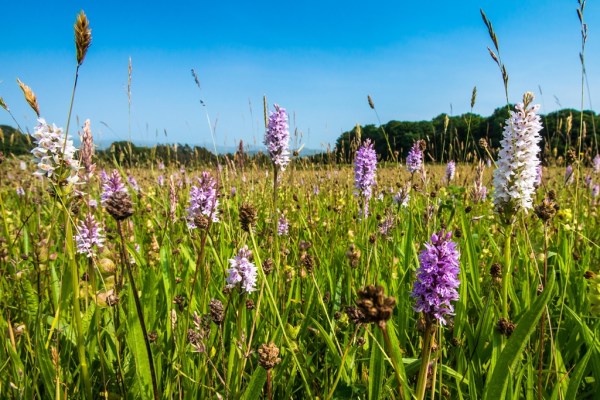
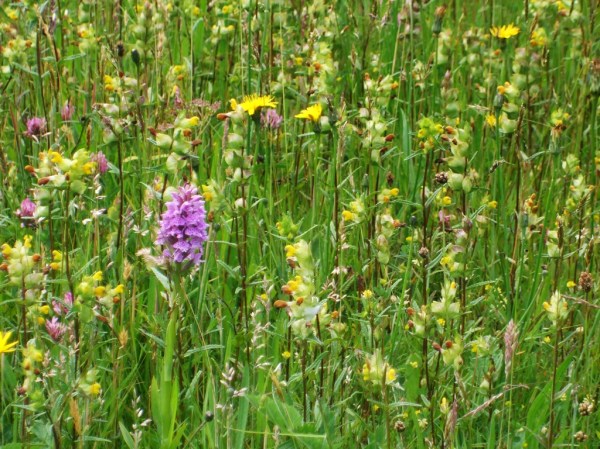
I’ve been away working again this week visiting yet more beautiful gardens and grasslands, and the absolute highlight of the trip was seeing this incredible hay meadow that had more orchids in it than I’ve ever seen in my life before.
In just this one field there are over 100,000 orchids of 5 different species.
Orchid Meadow, Photo: Mike Howe
The meadow was created by the National Trust in response to a request from The Prince of Wales to create a wildflower meadow in every county in Britain to celebrate the anniversary of the Queens coronation.
Orchid Meadow, Photo: Mike Howe
It was also a campaign to try to reclaim the glorious hay meadows that were once common in Britain, 98% of which we have lost to intensive agriculture since 1945, along with all of the wildlife that they supported such as wild flowers, butterflies, moths, bees and ground nesting birds such as meadow pipits and skylarks – all gone from our silent fields because of fertilisers, modern grass mixes, higher yields and the switch from hay making to silage.
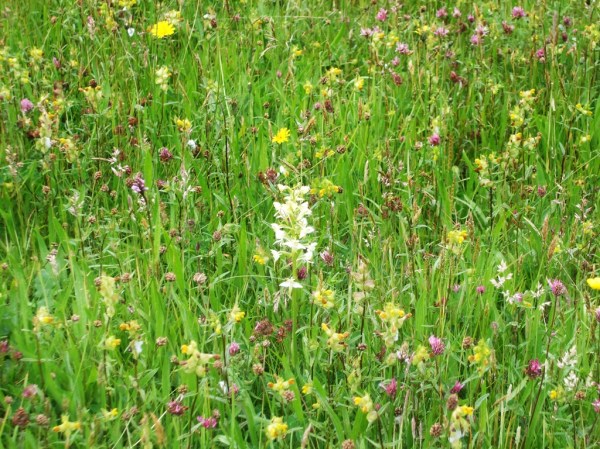
Orchid Meadow, Photo: Mike Howe
Undoubtedly the star of the botanical show in this restored hay meadow was the rare and beautiful butterfly orchid. This is the first one I’ve ever seen….
Butterfly Orchid, Photo: Mike Howe
I just hope that we can restore more of these once common traditional hay meadows to our countryside, so that the wildlife that we are in danger of losing forever can be around for our children to see and for future generations.
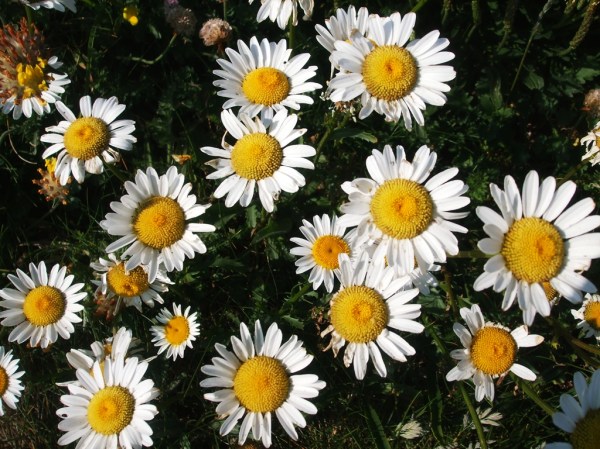
On my way to the beach yesterday for a leisurely swim (I know!) I came across lots of lovely patches of the oxeye daisy, our largest native member of the daisy family in the UK. It is a perennial herb with large flowers and also has the vernacular names common daisy, dog daisy, moon daisy and margarite.
Photo: Mike Howe
It is fairly common in meadows and roadside verges but always in conditions of moderate to low fertility, and where it occurs in abundance it transforms the sight of meadows and grassy banks in summer with carpets of white and gold.
Photo: Mike Howe
Because the oxeye daisy is limited in its capacity for vegetative spread it relies heavily on seed regeneration in open swards where other potentially dominant species are restricted by low soil fertility. This is why it is a common plant of some of our traditional hay meadows, as well as being abundant on waste ground, railway embankments and roadside verges and, in this case, sea cliffs.
The open flower heads attract a large range of pollinating insects, particularly bees, butterflies and hoverflies.
In the past, an extract from the plant was used as a herbal remedy to cure diseases of the liver and the chest.
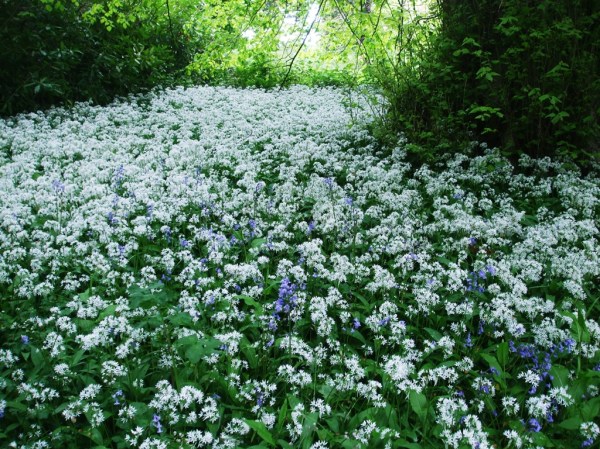
Beautiful carpets of wild garlic with patches of bluebells in the shade of the big canopy trees, smells absolutely lovely in the warm air, late spring in the woods.
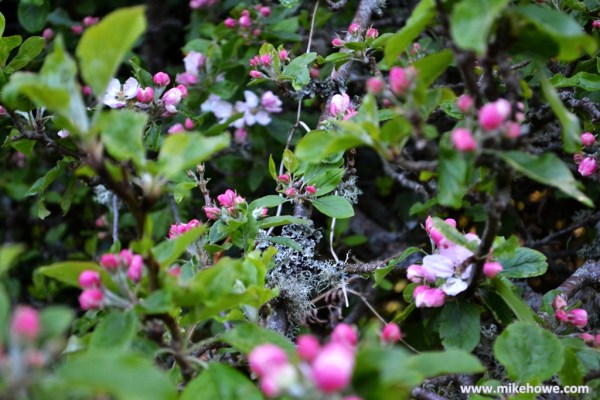
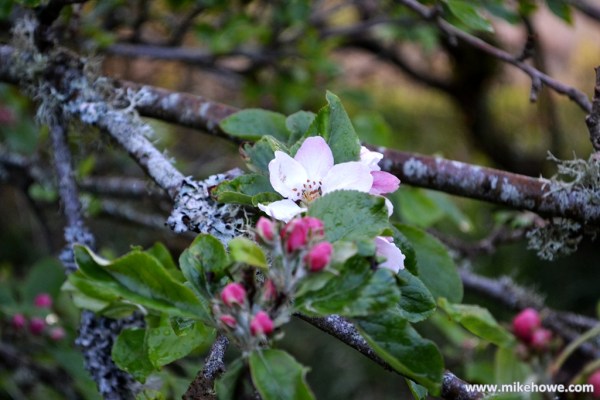
The old apple tree in our garden continues to wake up after winter despite having nearly fallen over and being propped up by an old chair. Every year it produces delicious cooking apples, and every May it produces beautiful blossom.
Photo: Mike Howe
This evening a light rain is falling, the raindrops glistening on the dark green leaves…..
Photo: Mike Howe
The trees antiquity is given away by the presence of the lichens growing on the branches and twigs…
Photo: Mike Howe
We don’t prune it or interfere with it in anyway because it is always so productive, hopefully it will live on for years to come….
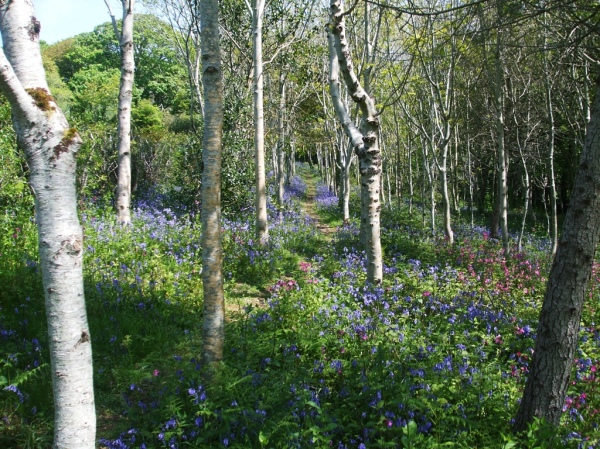
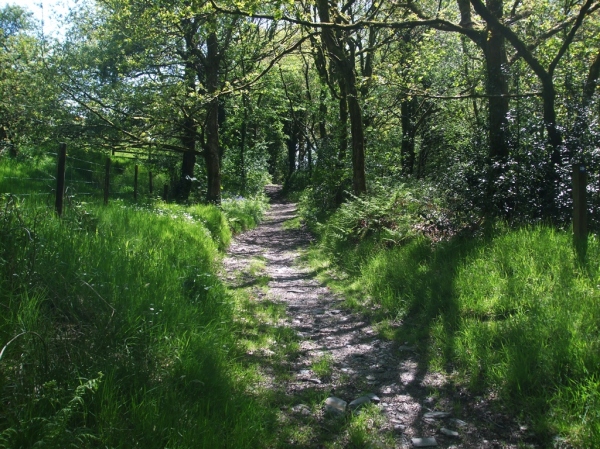
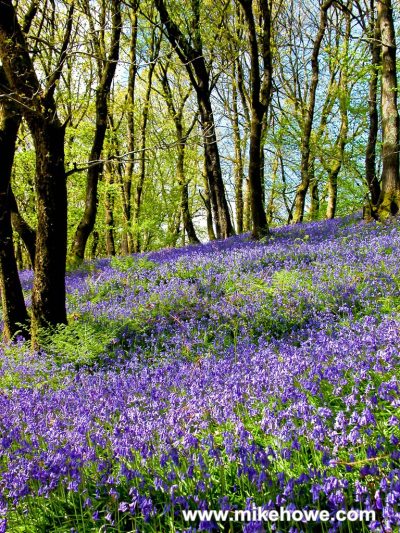
The bluebell woods are one of the most beautiful sights in spring. I was walking and talking with colleagues the other day and as we were exchanging long-range thoughts we entered this wood – everybody stopped talking….









 Mike Howe