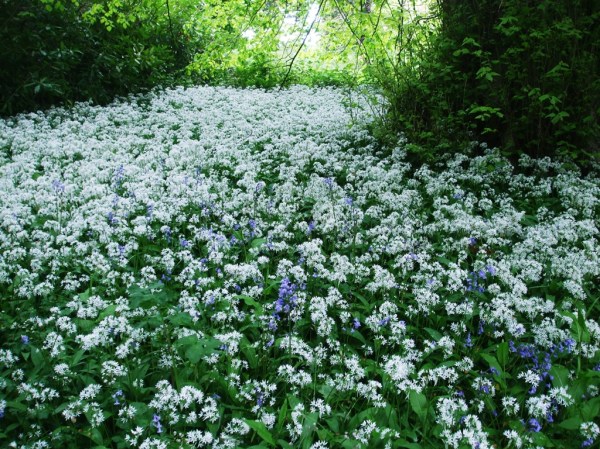
Beautiful carpets of wild garlic with patches of bluebells in the shade of the big canopy trees, smells absolutely lovely in the warm air, late spring in the woods.
Beautiful carpets of wild garlic with patches of bluebells in the shade of the big canopy trees, smells absolutely lovely in the warm air, late spring in the woods.
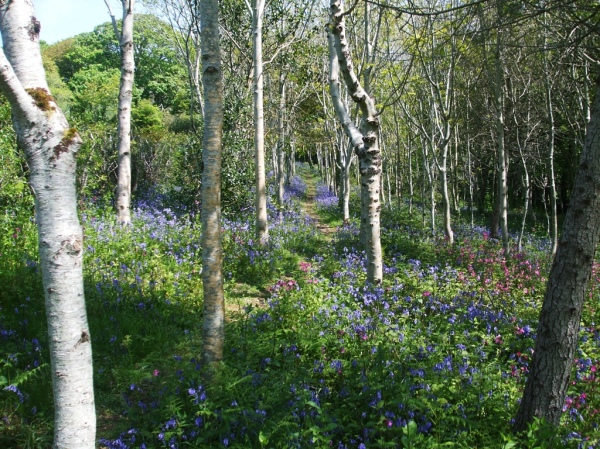
You kind of have to walk along these paths don’t you?
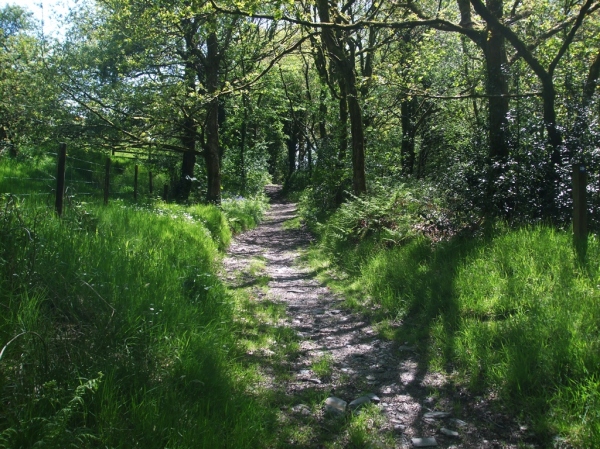
This is an ancient Welsh drovers road that was used for thousands of years to travel from Cardigan in the west to Shrewsbury in the east….
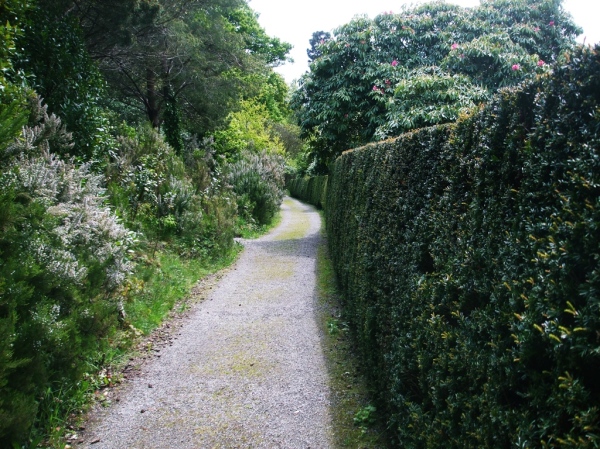
Ornamental garden path…..
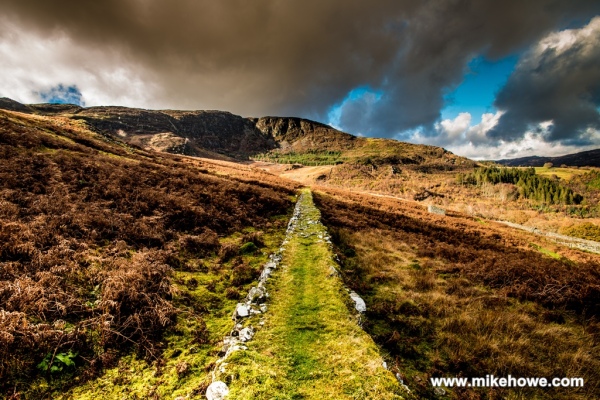
Gold miners track……
On my 4th album “Heading West” I wanted to interpret some of the North American landscapes that I had seen and felt in the music that I composed. But more than that I wanted some of the history of those landscapes to be heard in the music, and particularly in the instrumentation that I used.
This tune is about the prairies. I obviously wanted to depict wide open spaces, but I also wanted the warmth and intimacy of the piano and double bass to convey some of the folk traditions of times past. It’s not always a comfortable experience to interpret places that you are not completely familiar with, there’s a real danger of creating a cliche, as I have heard many times when the British culture or landscape is interpreted musically by others.
Anyway I hope that you like this one and can see where I’m coming from 🙂
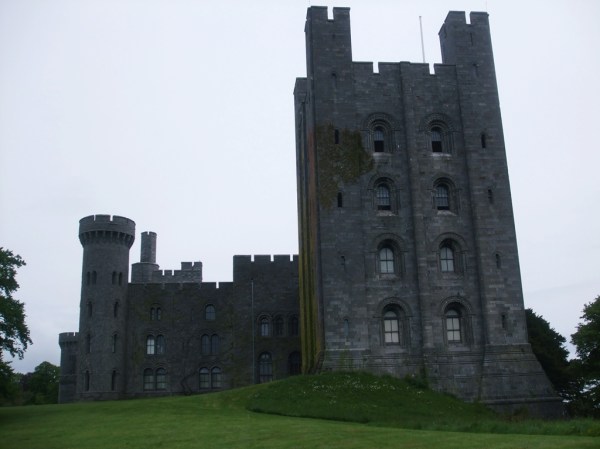 I’ve been away this week helping the National Trust out with some of their management issues at Penrhyn Castle in North Wales. My first impression of this place, because of its incredibly grand appearance on a truly large scale, was that this mock castle must have been built either by somebody with a great sense of humour, or someone with a whopping ego. I’m reliably informed it was the latter.
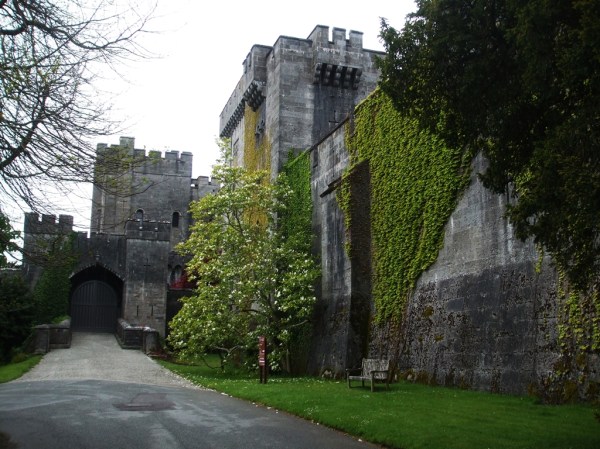 The castle is another reminder of the ubiquity of Britain’s links with slavery. It belonged to the Pennant family, famous for their slate quarries in North Wales, but whose major fortunes came from the exploitation of the slave trade in the Caribbean in the 17th century.
The family acquired plantations in Jamaica and held high office on that island, before a new generation returned to Britain and started trading from Liverpool. With the money the family made from these varied slavery-based enterprises, the Pennants acquired substantial holdings in Wales and also developed slate quarries.
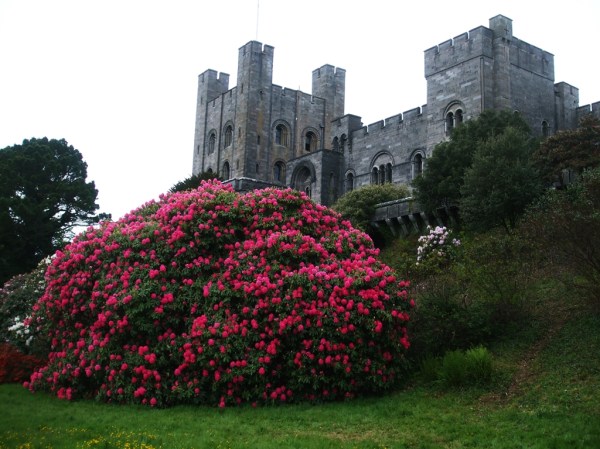 Penrhyn Castle was developed on the site of an ancient property, but it is a 19th-century version of a Norman castle. Alongside Harewood House, it provides an example of the levels of material wealth that was accumulated by those engaged in the slave trade, which was then invested into British property and land.
The family apparently were not liked by the indigenous Welsh population. Apparently they didn’t treat the quarry workers at all well.
These days the castle is owned and managed by the National Trust, and the gardens are lovely.
 It was a real pleasure to have a look round and to help out with management issues.
 The castle itself was closed on the day I was there, but the rather lovely railway museum was open, so I had a little wander around some beautiful machines from yesteryear…..
 I’ll be visiting many more interesting castles and mansions as part of this particular job, so I’ll keep you posted….

I like running on the beach, even on the wild days, in fact especially on the wild days. Photo by my brother Rod ( Rodhowe.com)

Mike A would like me to share this with you and I’m only too happy to oblige. Llyn Dinas in North Wales, a place we’re working to help look after.

So I’ve come up with an idea for a new music composition, I’ve worked out the structure, what happens where, how it should be put together, what instruments I’ll be needing for each part, rehearsed each instrument piece over and over, and then comes the tricky part – how to record it….
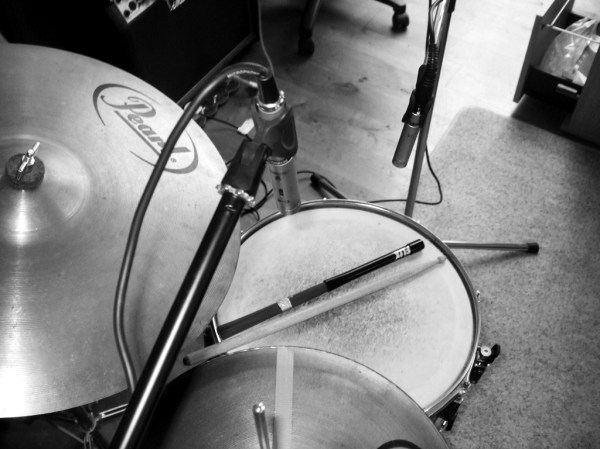 Each instrument is different, some more difficult to record than others. The drums are quite problematic because they need specialist microphones, and the studio space needs to be right acoustically.
 So arranging which bits of kit need to go where can often be a case of trial and error. And if, like me, you are completely self taught in the art of sound recording, things can take a little longer than they might otherwise, but at least I have total control over the outcome.
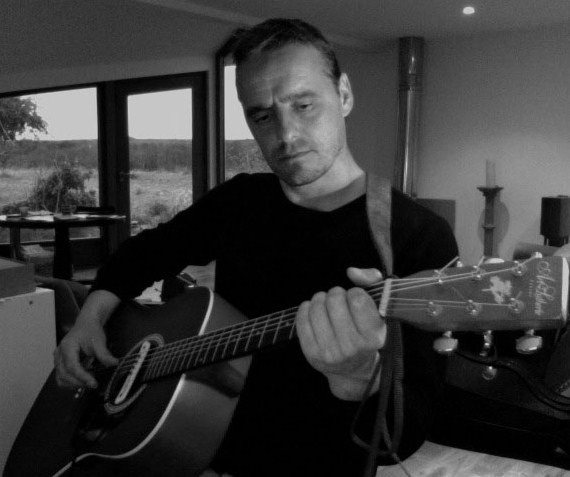 Then you have to perform the composition in each of its constituent parts. Depending on how well I’ve planned it, and also on how well I am playing on any given day, this process can either go very smoothly or, as is sometimes the case, there can be a lot of takes. The track I’ve just recorded had 2 guitar parts, a bass, keyboards and drums, so obviously it was a much more complex project than if it had been just solo guitar.
 And this is where all of that sound is recorded, stored, sonically manipulated and mixed. This process can take anywhere from a few hours to weeks or, and this has happened, years. Sometimes it just doesn’t work and you have to walk away from it because you can’t figure out why. But when it clicks, and all of the pieces come together and the mix is just right, it all becomes worthwhile and a new song is born 🙂
 This is me discussing the finer points of sound recording and mixing with my friend Ian.
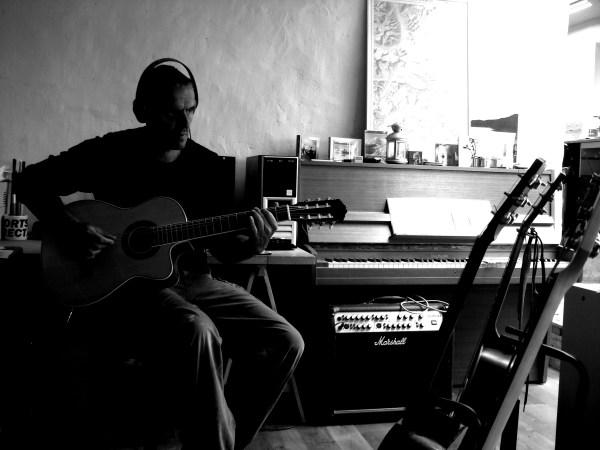 And this is me doing what I enjoy best, playing and recording a new melody on my guitar…..
I’ve really enjoyed teaching myself how to do everything, from learning how to play the instruments, to learning how to compose music, to learning how to become a producer and sound engineer. I guess if you’re really interested and enthusiastic about something you will learn how to do it, and you won’t really notice the thousands of hours spent doing it. And you keep learning. On this project I improved my skills in recording cymbals and drums, and I turned an idea in my head into something real that I think sounds pretty good.
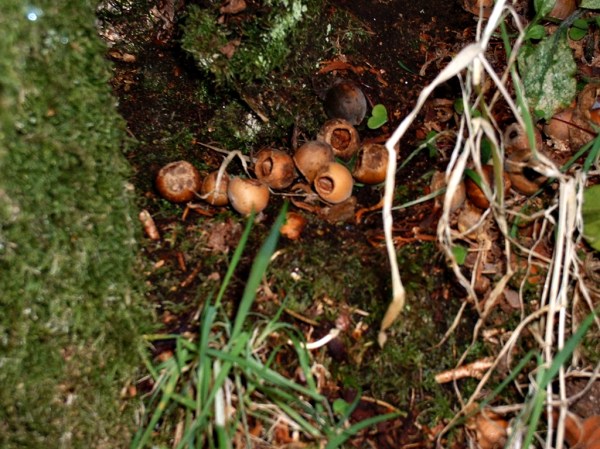
If you go down to the woods today….in a remote Welsh valley, and have a little rummage around, it’s surprising what you sometimes find. Here’s where a wood mouse has been storing and eating hazel nuts. The lovely circular openings are the give away for what’s been eating these nuts. If the openings had been perfectly circular, that would have been the work of the much rarer (and cuter) dormouse, but these were eaten and stored by a wood mouse.
And this is where he or she lives….

In the next few weeks some of the commonest and some of the rarest butterflies in the country will emerge and bring these woods and grasslands to life, such as this beautiful silver-washed fritillary.

Photo: Butterfly Conservation
It’s obviously really gratifying when a music reviewer takes the time to critique your album over all the countless others that are released every month, and even more so when they say nice things 🙂
So a big thank you to Mike Debbage from mainlypiano.com for this great review of my new album Heading West…..
 Heading West by Mike Howe 2013/ Real Music Total time: 52:46
Reviewed by Michael Debbage
With Howe’s impressive debut being released back in 2009, every single year he has come up with a new shining jewel to add to his recording treasure chest. However, 2012 represented the first year that Howe was unable to maintain this ridiculous recording pace. Instead, he finally skipped a year with Heading West receiving a formal release in the year of 2013 as well as probably one of his finest recordings to date.
While Howe continues to lay his musical foundation in pastoral yet engaging pastures, Heading West represents a more exploratory recording and is best summed up by the liner notes which state that “through the heart and hands a British guitarist interprets his American travels”. Needless to say, Heading West lightly draws on the strains of folk, jazz and country allowing us as the listener to hear this very intelligent and introspective music become a tad more retrospective without losing his gorgeous original musical voice.
Though Heading West begins like any typical Howe album, by track 3 you will find yourself in somewhat new territory with Howe exploring the light jazzy winds of “Badlands” that is driven by what sounds like a stand up bass and light percussive work that intermingles seamlessly with Howe’s guitar and piano work. Speaking of percussion work, check out the stark exotic “Navajo Winds” that features Howe on bongos who decides to pick and pluck at his guitar strings versus strumming. Meanwhile, the light orchestration and gentle spacious piano work on “The Last Buffalo” have similar exotic results but this time leaving a sense of openness. It brings to mind the rolling open plains that are now empty and bare with only ghosts of the once great roaming buffaloes. The same exotica can be found on the mystical “Desert Solitaire” that includes Howe’s delectable but restrained guitar work. On the completely different end of the musical spectrum, perhaps the more driven melodic sensibilities of “Wyoming” may also your suit your fancy.
Otherwise, Heading West is filled with Howe’s effortless ability to make outstanding exquisite music, reflecting his musical journal of his stateside journeys. It also represents one of his best recordings to date and undoubtedly one of 2013’s finer musical moments in its genre. So travel west into a sunset with Mike Howe as his music is your perfect engaging travel companion.
I sometimes get asked how I think of titles for my instrumental songs. I suppose it’s a fair question when I think about it, after all there are no lyrics, so in theory I could call a song or tune anything I wanted.
It doesn’t really work like that though. Most of the time a piece of music comes as a result of having something to say about something in particular. It’s how I feel about something that gets the creative process moving, so that by the time I’ve finished the composition, I know exactly what the song should be called.
This song has one of my more direct, not very abstract titles, and it’s exactly about what it says it’s about. Hopefully the listener can here the regret?…..
“Sorry For What I Said conveys humility, sincerity, and regret — a heartfelt beauty (Kathy Parsons, mainlypiano.com)
 Mike Howe